Ecco
1963 directed by Gianni Proia
by Klon November 17, 2025
In Italian mondo means “world,” but in cult film circles it’s a signifier that this thing is unusual, like adding a-go-go to the end of a title or -sploitation at the end of a word. A mondo movie is a form of documentary made up of loosely connected vignettes intended to examine bizarre behaviors or subcultures, almost always containing disturbing imagery intended to shock Western audiences. While it isn’t the first, the best place to mark the beginning of the movement is in 1962 with the international hit Mondo Cane co-directed by Paolo Cavara, Franco Prosperi, and Gualtiero Jacopetti. Filmed across the globe, Mondo Cane makes everyone in the world seem a little weird- EVEN YOU.
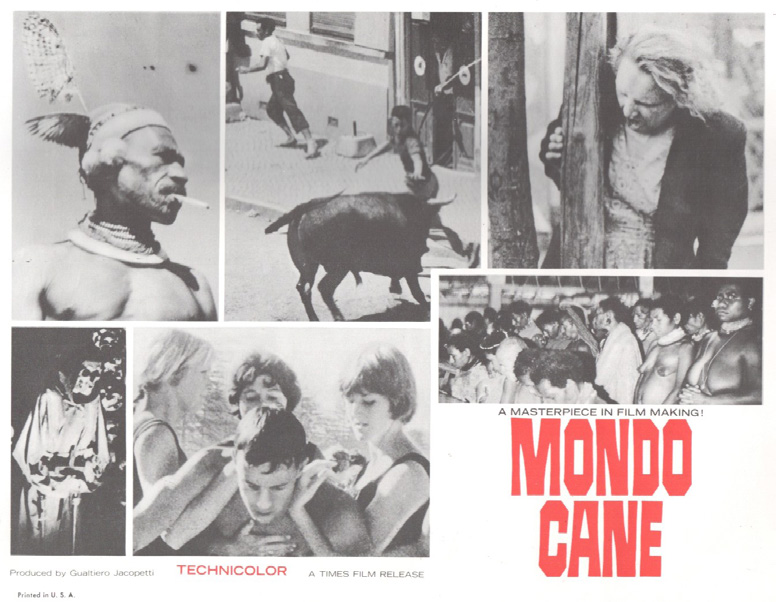
Mondo Cane had an ingredient that was unheard of in popular documentaries that preceded it, a sense of Irony. Until then documentaries were dry and highbrow - they were something you had to sit through, not something you went to see. The movie juxtaposes bizarre and novel customs throughout the world revolving around broad themes like death and burial, courtship, food, animal care, fashion and more, all shown with delight and disgust, usually both at once. Scenes of nudity and animal cruelty mingling with breezy social commentary made it immediately notorious. but it’s clearly made by talented filmmakers and is always well produced even when they resort to occasionally staging footage. Riz Ortolani and Nino Oliviero’s score was a hit with the theme song “More” winning a Grammy and earning an Academy Award nomination for best original song.
Before his career in film co-director Gualtiero Jacopetti claims to have been part of the anti-fascist resistance in Italy during WWII, but he got in more trouble as a journalist for publishing sexy pics of Sophia Loren in his newspaper, even serving a year in prison. His introduction to film was writing commentary for the proto-mondo film World by Night (1960, Luigi Vanzi), also known as Il Mondo di Notte from 1960. World by Night documented the spicier elements of nightclubs and strip joints from Hong Kong to Broadway, serving as a bridge between the nudist camp documentary and the mondo flick. In addition to Jacopetti, one of the producers of the film was Gianni Proia who would take over the series as director with World by Night 2 in 1961 which was more of the same night club cheesecake but pushing the stranger elements such as a singer in a teddy and fishnets tearing a phone book and bending a steel bar. Proia also made World by Night 3 in 1963 which American audiences saw in a sliced up form as ECCO, taking parts of World by Night 2 & 3 and added a few new scenes and English narration by actor George Sanders.

Ecco may sound like a cobbled together mess, but it turns out to be one of the best films in the genre thanks to some moments of truly excellent filmmaking. Beefcake muscle studs, a trip to the Grand Guignol theater, a performance artist running knives through his cheeks, indigenous dancers, Portuguese whale hunters, chickenblood drenched satanists… Monks ascend stone cliffs in rope nets to a monastery so high in the sky that it may as well be heaven itself…in fact they vow to never leave, even their bones…in a chilling end to the segment the camera zooms past glowing votives and into a room stacked with bleached human skulls… a gruesome craft or a religious ritual? Ecco details the human body as used by humans for humans all over the world…
Ecco hit screens during the flap of Mondo Cane imitators with titles like Mondo Oscenita (1966 Joseph Mawra), Mondo Bizarro (1966 Lee Frost), Mondo Inferno (1964 Antonio Margheriti, Marco Vicario) and of course Mondo Topless (1966 Russ Meyer). These usually didn’t have the budget to send film crews all over the world so they would resort to cheap tricks. Many would simply stick to easy to access locations or they’d chop together documentary footage from other films and add music and narration, and many scenes were simply fake. American producers Lee Frost and Bob Cresse were behind a number of these rip-offs including Ecco.
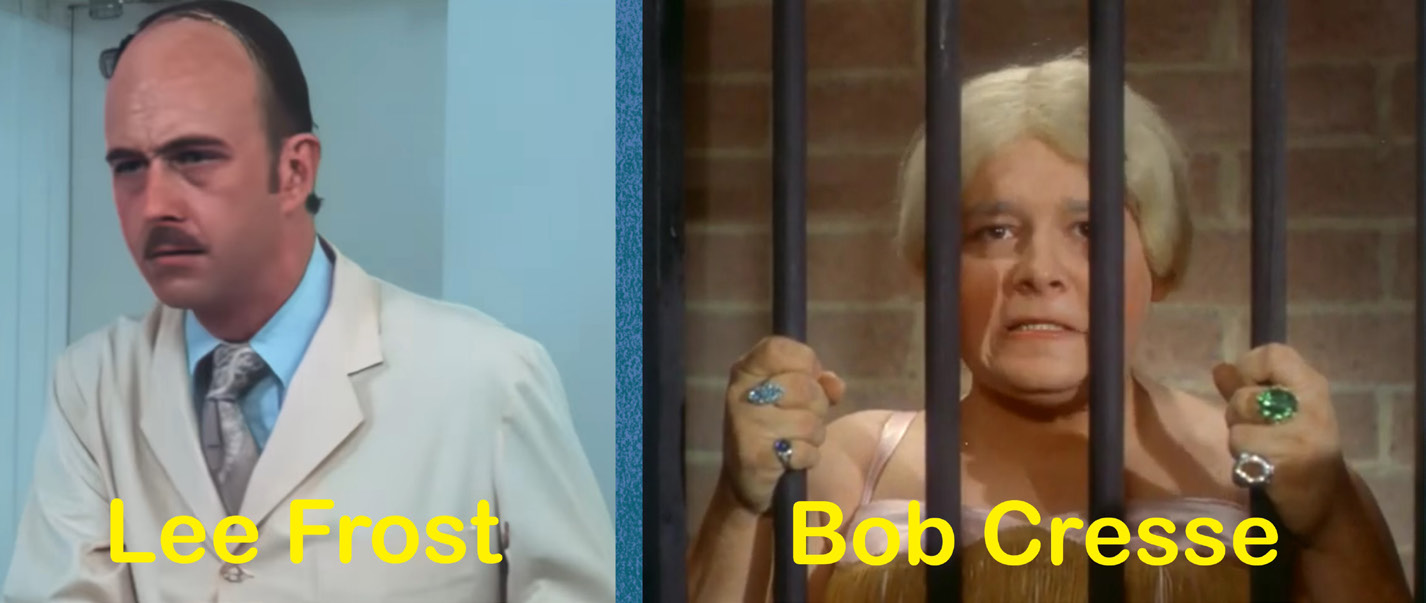
Frost and Cresse were an important part of the LA exploitation scene and had a hand, directly or indirectly, with many SWV titles. Together they would slime the silver screen with titles including House on Bare Mountain (1962, Lee Frost, Wes Bishop), Hot Spur (1968, Lee Frost), A Climax of Blue Power (1974, Lee Frost), and the notorious Love Camp 7 (1969 Lee Frost). While the pair were fluid with their duties Frost was generally the director while Cresse was the producer. They used various credits and production companies with respectably bland names like Olympic International Films, Cresse-Roma, International Theatrical Amusements, and, my favorite, B & M Productions. Cresse’s friend and rival Dave Friedman, whose autobiography “A Youth in Babylon: Confessions of a Trash-film King” will be a frequent and colorful source in this series, had this to say about the pair:
“Cresse handled Frost like a fine violinist would handle a Stradivarius. Cresse would say to the industry as a whole, “Lee Frost is the best; there is no one who can approach him. He is the finest.” And that’s all Frost wanted. Cresse didn’t need to pay Frost; he just told him how good he was ... That’s sad but true!”
With many of the mondo movies they had a hand in they would chop together footage from any source they could get their hands on as long as it was strange or exploitable, they would even stage their own scenes as needed. Ecco exists in its current form because of this process, it just so happens that the source material was of higher quality then some of the other films they were cannibalizing. Frost rewrote narration to be read by the esteemed British actor George Sanders and its believed that he directed the scenes of a satanic ritual himself.
Frost’s career spanned into the 90s, moving from one market to another, one year making weirdo horror oddities like The Thing With Two Heads (1972) while directing redneck drive-in favorites like Dixie Dynamite (1976) a few years later. Cresse however left the world of cinema in the mid 70s after being shot by the LAPD. Friedman again:
“Cresse always liked to carry a gun. One night he was in a bookstore at Hollywood and Western. He looks up and there’s 3 guys beating the hell out of this broad. They got her down on the ground and they’re kicking her. Cresse runs over and goes to his car and takes his gun out and holds the gun up, saying, “Stop! I’m calling the police! Stop or I’ll shoot!” And this guy whirls on him and says, “We are the police, motherfucker!” and shot him twice right in the stomach. And then the guy shot his dog. He almost died ...and he never really recovered from that, mentally. LAPD—they’re “Dirty Harry’s” down here!“
In true Frost Cresse fashion Ecco was a success, thanks in part to an advertising campaign which read:
If this film frightens you, it’s because the world is frightening! If you find it horrifying, it’s because the world is filled with horrors! If it shocks you, it’s because we are a shocking race! If you find it filled with beauty and hope, you have understood it! We dare you to see…ECCO
In poor ol Orem Utah the newspaper ads promised “An Incredible Orgy of Sights and Sounds” and they really just weren’t ready for orgies in Orem in 1965. A heated debate at the city council meeting led to youth ticket bans for films with objectionable content and the formation of the Utah County Council for Better Movies and Literature (also known as the UCCBML). A true sign of exploitation success!
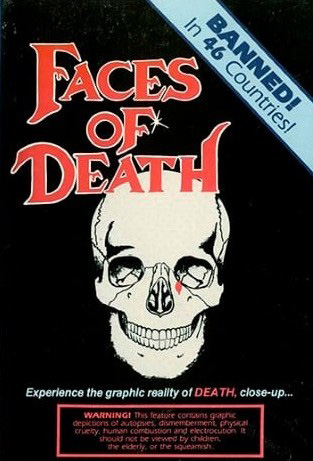
Jacopetti and Prosperi would go on to co-direct a series of controversial films such as Africa: Blood and Guts (1966), Mondo Cane 2 (1963), and Goodbye Uncle Tom (1971) while Cavara would split from the other two and move from genre to genre, making gialli, comedies, and even a western. The mondo genre never really went away, though it would morph radically in the ensuing decades. In the 70s there were occasional hits like Shocking Asia (1974, Rolf Olsen) and Mondo Magic (1975, Alfredo Castiglioni, Angelo Castiglioni, Guido Guerrasio), but the returns were dwindling. Proia attempted a retread of his earlier films with World by Night Today in 1976 to little attention, one of his final works was a state produced series that received critical praise in Italy, but saw him reprimanded by officials that found it too cynical and critical of the state. The genre saw a comeback with the shockumentary tape craze kicked off by the 1983 VHS release of the 1978 film Faces of Death (1978, John Alan Schwartz), and you can find the mondo spirit today in everything from Bizarre Foods with Andrew Zimmern on the Travel Channel to Vice News to Atlas Obscura.