Teaserama
1955 directed by Irving Klaw
by Klon November 17, 2025
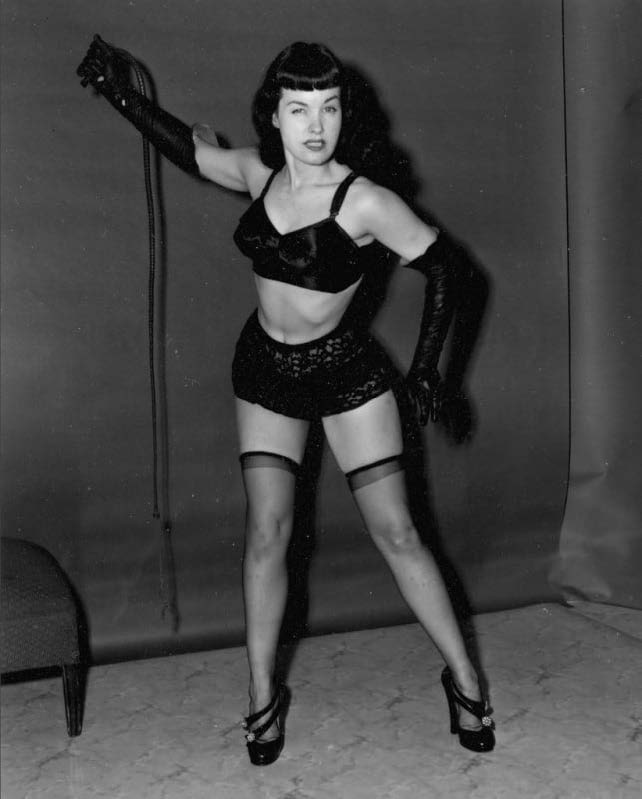
HUBBA! HUBBA! AAAOOOGAAH! HOTCHIE MAMMA! Bettie Page! Tempest Storm! Lily St Cyr! These buxom beauties give me a boner to bust the bank!! My trousers are getting a leeeetle tighter, if you catch my meaning. My shirt’s getting sweat stains. I’m gonna have to pop an extra blood pressure pill! This is no joke! My body is tingling, my vision is getting blurry, my chest is getting a leeeetle tighturrrrgh
But on a more serious note, this is not a very entertaining movie. A friend recently purchased the Varietease/Teaserama (1954/1955, Irving Klaw) double bill blu-ray and proclaimed it a “death march.” Both films are sparse recreations of burlesque night club routines from fetish art distributor Irving Klaw. The 1990s Bettie Page mania made these top sellers in the Something Weird catalog, but it’s tame even compared to the contemporaneous short bondage films being made by Klaw and Page. Today the most interesting moments outside of the scenes with the bigger stars are with Vickie Lynn, billed in ads as the “famed female impersonator,” who’s presented just as playfully as the rest of the cast.
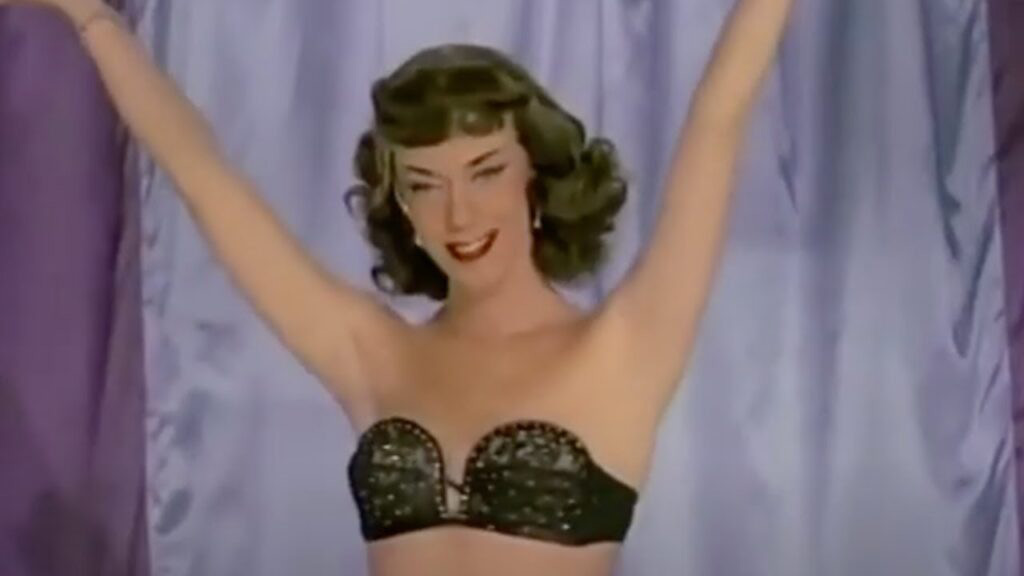
Neither a documentary about a style of performance nor a document of a performance, Teaserama is a fantasy of a performance from an imaginary past. Klaw never gives us typical documentary establishing shots of, say, the exterior of a theater, a ticket booth, an audience filing into their seats, backstage crew setting lights into place, instead the stage is the set and the set is the stage. Sound effects recordings of an audience are inelegantly spliced in, adding to the artificiality. Strictly confined in both location and perspective, even when the action takes place in a bedroom we’re aware that it’s contained within the stage - at any moment we can expect to see curtains peeking into frame.
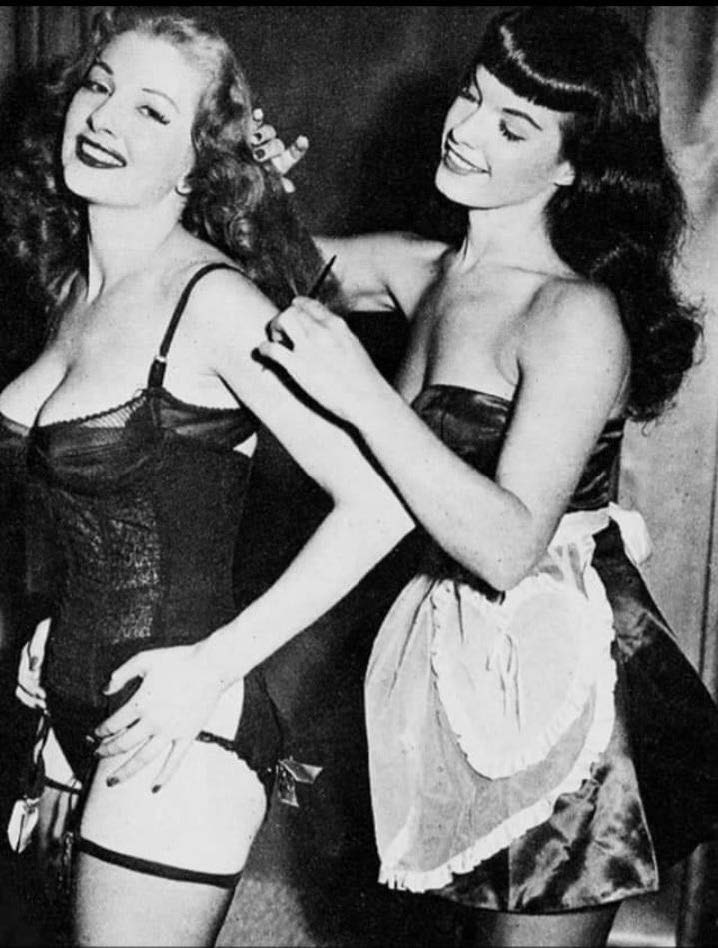
While there are many acts that appear in both films, the headliners were the draw at the time; Varietease from 1954 features Lili St Cyr, the blonde bombshell sung about by The Who in their song Pictures of Lili, and 1955s Teaserama stars the legendary Tempest Storm and BOTH of them feature the iconic Bettie Page. Klaw made these after the success of the 1953 film Striporama (1953, Jerald Intrator) also starring Page and St Cyr. Tempest Storm had previous experience on screens thanks to Russ Meyer who was so inspired by her gargantuan juggs that he made his first movie, the now lost 40 minute film French Peep Show (1954). Burlesque shows have a long varied history that’s guarded and argued over by a horny and cantankerous group of historians, but it seems safe to say that in the 1950s these live shows were in a state of decline. However, the burlesque movie micro-genre lasted only a skimpy moment as impatient audiences sought out more explicit thrills from nudist camp documentaries, scandalous foreign arthouse films, and, soon enough, the nudie cuties.
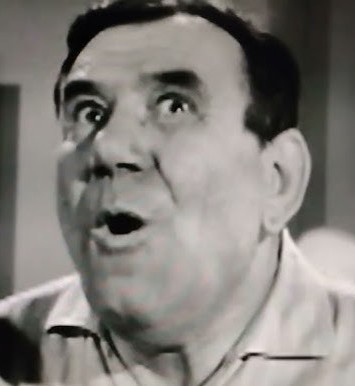
The double feature also features brief comedy routines between dancers. Burlesque comedy was the raunchy cousin to the more prestigious and lucrative vaudeville circuit, but comedians love strippers so they were often willing to hone their chops to the rowdier burlesque audiences. Joe E Ross is one of the awful comedians that appears in Teaserama; he’s famous for being in the TV series Car 54, Where Are You (1961-63, created by Nat Hiken), but he should be more famous for passing Rodney Dangerfield his first joint. According to Dangerfield’s autobiography, It’s Not Easy Bein’ Me:
“As you might have figured out by now, Joe E. was a rogue. He also had a habit of marrying hookers. When he had an argument with one of them, he’d say, ‘Go fuck somebody!’
Joe E. had a thing about coats. One day he and I were walking in New York. We came upon a huge men’s clothing store called Howard’s. Joe E. said, ‘C’mon. I need an overcoat.’ When we were inside, Joe E. waved off the salesman. ‘I’m just lookin’,’ he said. I sat down and watched Joe E. try on overcoats. When he put on one that he really liked, he got that look in his eye that I knew meant trouble. He said, ‘Let’s go. I’m walkin’.’ I didn’t want to get caught stealing a coat, so I said, ‘You’re walkin’ alone.’ I went out about twenty feet behind him .. That maniac got away with it - he stole that overcoat. We walked over to Joe E.’s hotel to tell his hooker wife the good news. While Joe E. was telling her the story, he farted. At that, his wife yelled at him, ‘Joe! You ate and you didn’t bring me anything?’”
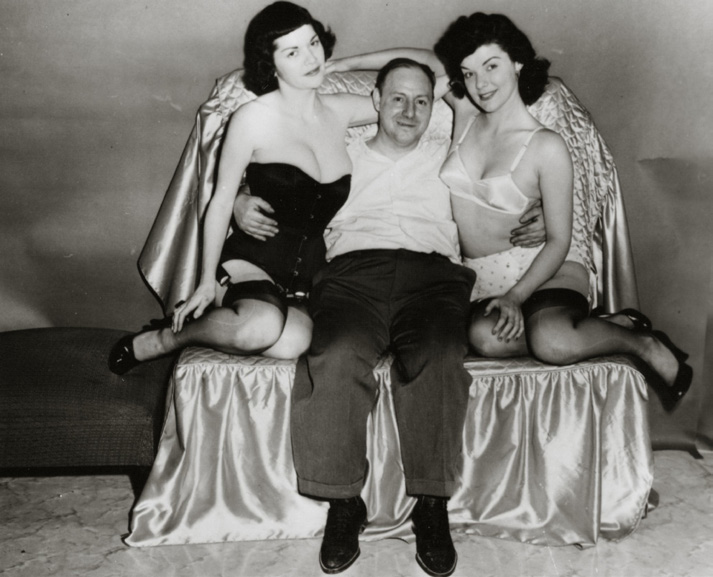
Irving Klaw made a fortune selling pin up photos of celebrities from his 14th st bookstore in NYC, calling himself the PINUP KING and eventually drawing controversy as the authorities realized that he was also selling bondage and fetish photos and art. In 1957 Bettie was summoned as a witness against him but her experiences with Irving and his sister Paula were mainly positive and as a result she was never called upon to testify. The double feature of Teaserama and Varietease played theaters until the early 60s, however he continued to be hounded by law enforcement and died at age 55 in 1966. According to a 1977 Village Voice interview with Paula Klaw, Irving’s sister and business partner:
“Paula was in charge of posing the pictures. She tied ladies to chairs, hung them from clotheslines, gagged them on beds, and manacled them with leather. The pictures had titles like Betty Comes to New York and Gets in a Bind. ‘It was wonderful those days,’ Paula says now, ‘we had politicians, judges, prime ministers coming here to buy our photos. They would park their limos right outside on 14th Street.’ After a while however, Irving got busted for sending the stuff through the mails. Lengthy court cases ensued. Fighting back a tear Paula says, ‘it was all that that killed Irving, I think. They said we sold porno. We did not sell porno.’”
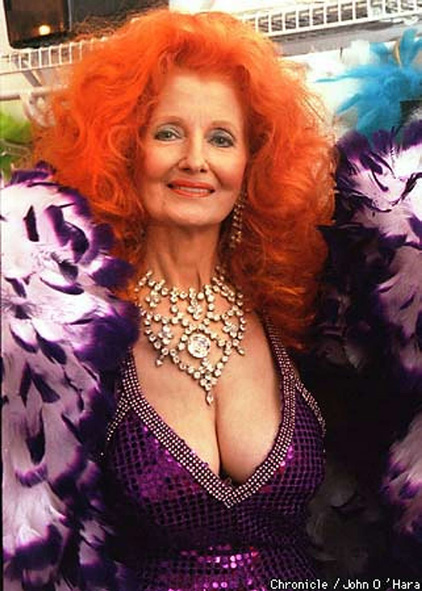
Tempest Storm’s list of rumoured lovers contains oscar winners, multiple platinum certified musicians and at least one president. She married a handful of times and starred in a few more films, notably Mundo Depravidos (1967) directed by her fourth husband Herb Jeffries. Jeffries was a star in his own right, a black singing cowboy who starred in films like Harlem on the Prairie (1937, Sam Newfield) and The Bronze Buckaroo (1939, Richard Kahn) in the 30s. Storm lived until 2021 and loved the attention of her fans, performing well into her 80s.
Bettie Page’s story is tied tightly with 20th century Americana, it’s got something for everyone. After retiring she began following Christian minister Billy Graham having no regrets about her past as a pin up model. Through the 70s and 80s she struggled with paranoid schizophrenia and violent outbursts. While spending many years in state mental care her fame grew unbeknownst to her.
In her absence from public life she’d become a meme, a part of the collective mental image map. Once she began re-engaging with her fame later in life she initiated a campaign of brand management that seems incomprehensible today. But she was ready to tell her story and we all wanted to hear it. Part of her brand management, however, was litigious. The people in her life had advised her to hire attorneys to collect money being made from her image. This put Something Weird in their sites. On her behalf but perhaps without her knowledge they filed a lawsuit against the company for using her likeness to advertise the films in their catalog. Page lost the lawsuit and was required to pay Something Weird’s legal fees. The company waived the fees thanks to an offer of free advertising in Playboy magazine from Page’s fan and friend Hugh Hefner. The entirety of her life is too overwhelming to detail here; her highs and lows and detours accidentally made her one of the most influential celebrities of the last 70 years and a regular figure on Forbes’ list of richest dead celebrities.
Film is a form of ideal creation. Filmmakers craft the present to be preserved as a document of the past - a shared memory, a communication through time without body. The camera lens supplants the perspectives of the cast and crew that create the film and the screen is the audience’s portal to this moment. The images that Bettie Page and Tempest Storm created in their youth were powerful enough to become frozen in the public consciousness. Storm approached the process of aging confrontationally, the ideal she created in her youth became layered with humanity as the public watched her body change. Page retreated away from the public, refusing to be filmed during interviews for fear that the public would judge her for the weight she’d gained or the way she’d aged, understanding the fragility of the ideal she’d created and perhaps the fragility of all ideals.